How AI and Computer Vision Are Quietly Transforming Retail
- Benny Lauwers

- Oct 28, 2025
- 4 min read
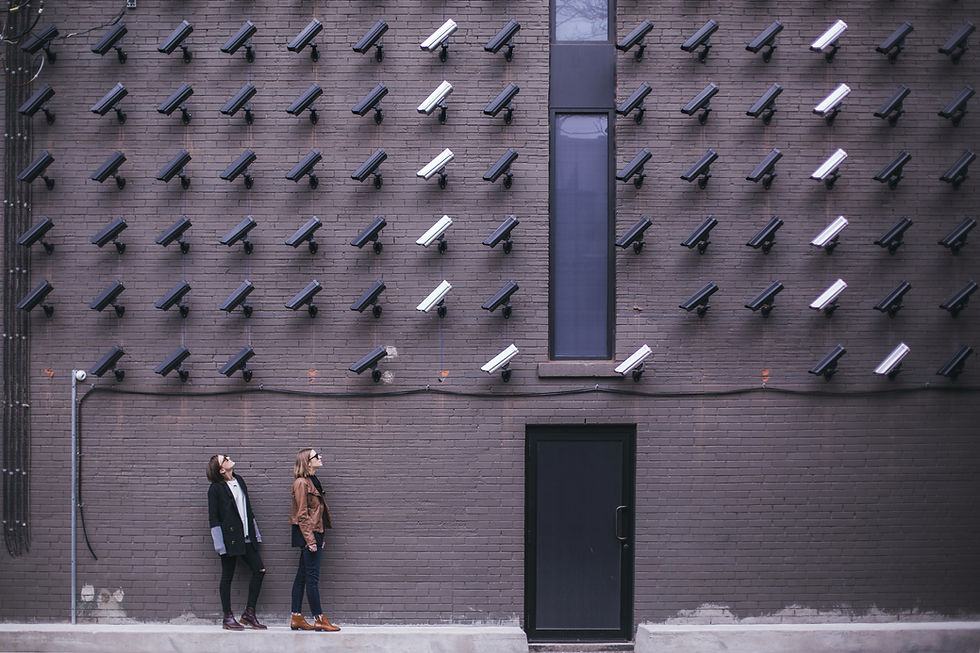
Cameras Used to Watch. Now They Understand.
For years, cameras in retail stores were seen purely as security tools. Silent observers, there to prevent loss, not create value.
Today, that same infrastructure is being redefined.
Thanks to advances in AI and computer vision, cameras have become sensors of behavior, capable of transforming raw movement into measurable insight, without identifying anyone.
The result? A new era of visibility inside the physical store. One that rivals the analytical depth of e-commerce.
From Pixels to Patterns
At its core, computer vision is the ability for machines to interpret visual data much like the human eye would. But at scale and without fatigue.
In retail, that means teaching algorithms to recognize movement, dwell time, and interaction instead of people or faces.
A single frame might capture:
where a person walks,
how long they pause,
whether they reach toward a product,
and when they move on.
When aggregated over hours or days, these micro-movements reveal powerful macro-patterns:
which displays attract attention,
which aisles feel ignored,
when queues build up,
and how engagement shifts across the day or week.
This turns everyday camera feeds into a real-time behavioral dataset, ready to guide layout design, staffing, and merchandising.
The Human Side of Machine Vision
The misconception is that AI “watches” people.
In reality, it abstracts them.
Instead of recognizing who someone is, it measures what they do, as a series of anonymous coordinates, dwell durations, and transitions between zones.
It’s data without identity.
That distinction is crucial in the European context, where GDPR and ethical data use are non-negotiable.
Modern in-store analytics systems (like Storalytic) are designed around privacy by architecture:
No facial recognition
No biometric storage
Only anonymized, aggregated movement data
Local processing or edge inference (so footage never leaves the premises)
It’s visibility without surveillance. A balance that finally makes AI adoption practical and responsible for physical retail.
From Guesswork to Guidance
Most stores still make critical decisions based on intuition:
“This display feels slow.”
“Let’s move staff near checkout.”
“People don’t seem to notice the new collection.”
AI replaces that intuition with evidence.
With computer vision, retailers can now measure:
Behavioral Signal | Operational Meaning |
Zone entries & exits | Footfall by area |
Average dwell time | Engagement intensity |
Heatmap movement paths | Flow bottlenecks |
Queue duration & build-up | Staffing optimization |
Interaction patterns | Display effectiveness |
That visibility turns the store into a continuous feedback loop.
Every layout tweak, product change, or campaign can be tested, measured, and refined — just like A/B testing online.
The outcome isn’t surveillance; it’s operational intelligence.
What AI Looks Like in Practice
Imagine a Saturday in a garden center.
By 2 PM, the system detects sustained dwell spikes near the barbecue section, but low movement toward checkout.
Staff step in to engage visitors, conversion rises 14%, and the store avoids another “busy but flat” sales day.
Or a DIY retailer launching a new end-cap display.
AI heatmaps show high awareness but short dwell (<10 s).
The insight: people see it but don’t connect.
A quick layout change boosts average dwell to 28 s. And sales follow.
These are not abstract numbers.
They’re micro-decisions that shape daily revenue.
Why Adoption Is Accelerating
Three forces are converging:
AI maturity — Algorithms can now analyze movement robustly even in crowded, complex environments.
Hardware evolution — Existing camera networks (CCTV, UniFi, Axis, etc.) already provide the necessary feed; no new sensors needed.
Cultural shift — Retailers are realizing that digital-level intelligence inside the store is no longer optional — it’s competitive hygiene.
As a result, what once felt futuristic is now quietly becoming standard infrastructure for data-driven retail.
Storalytic’s Role: From Motion to Meaning
At Storalytic, we harness these AI tools to transform existing camera networks into zone-level intelligence systems.
Our models interpret:
where visitors go,
how long they engage,
and how behavior translates into missed or captured value.
The platform never recognizes faces. It recognizes patterns of opportunity.
It’s AI built not to watch, but to understand.
By combining these behavioral insights with conversion funnels and ROI metrics, we help retailers quantify what was once invisible:
the economic impact of attention.
The Bigger Picture: AI That Augments, Not Replaces
AI in retail isn’t about removing human intuition.
It’s about enhancing it.
Managers still know their stores best. AI simply gives them the context and confidence to act faster and smarter.
In this sense, AI becomes a mirror for the physical store, reflecting back what’s really happening, so human judgment can focus where it matters most.
Because the smartest retail isn’t algorithmic.
It’s augmented.
Closing Thought
The cameras haven’t changed.
The intelligence behind them has.
And as retailers begin to see their stores not just as spaces, but as systems of behavior, AI and computer vision will quietly become the most valuable staff members they have. Always observing, always learning, never guessing.